Ledger Login: A Detailed Guide to Safe and Private Crypto Access
In the evolving world of cryptocurrency, security is not optional—it is essential. Every year, millions of dollars are lost due to hacked accounts, phishing scams, and compromised passwords. As a response to these risks, hardware wallets have become the preferred choice for serious crypto users. Among them, Ledger stands out as a global leader in digital asset protection. At the heart of this ecosystem lies Ledger Login, a secure, hardware-based authentication system designed to protect ownership and access.
This guide explores Ledger Login in depth, explaining its purpose, functionality, benefits, setup process, security architecture, and best practices. Whether you are new to crypto or managing a diversified portfolio, understanding Ledger Login is crucial for safeguarding your assets.
Introduction to Ledger Login
Ledger Login is the secure access method used to authenticate users when they connect their Ledger hardware wallet to the Ledger Live application. Unlike traditional login systems that depend on usernames, emails, or passwords, Ledger Login is based on physical verification and cryptographic proof.
The login process ensures that:
You remain the sole owner of your private keys
Access is impossible without the physical device
Transactions require manual approval
This approach aligns with the core philosophy of cryptocurrency—self-custody and decentralization.
What Makes Ledger Login Unique
Ledger Login differs fundamentally from conventional authentication systems. Instead of trusting centralized servers, it relies on hardware-level security.
Key distinguishing features include:
No online accounts
No password storage
No cloud-based private keys
No remote access capability
This design eliminates many of the most common attack vectors used by hackers.
Understanding the Ledger Hardware Wallet
To understand Ledger Login, it’s important to understand the device itself.
Ledger hardware wallets are small physical devices designed to store private keys securely. Popular models include:
Ledger Nano S Plus
Ledger Nano X
These devices contain a Secure Element chip, which isolates sensitive data and protects it from external access—even if the connected computer is compromised.
Ledger Live and Its Role in Ledger Login
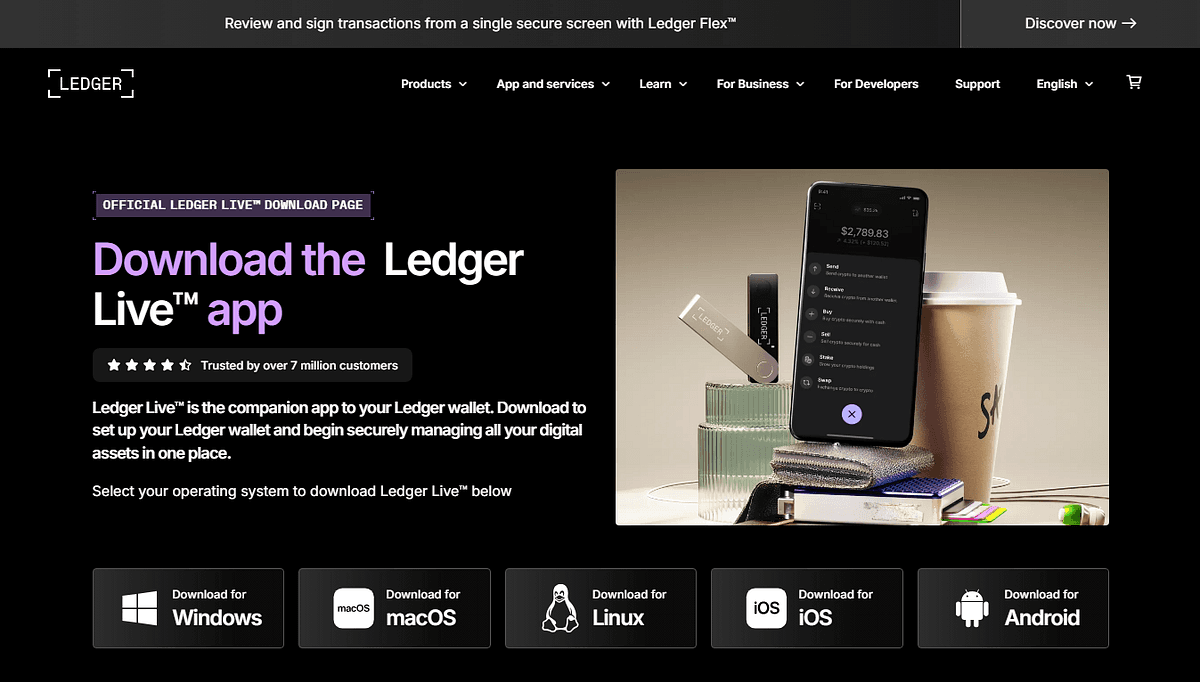
Ledger Login is completed through Ledger Live, the official software interface developed by Ledger. Ledger Live acts as a bridge between your hardware wallet and blockchain networks.
Using Ledger Live, users can:
View balances
Manage accounts
Install blockchain apps
Send and receive crypto
Interact with NFTs and DeFi platforms
Without Ledger Live, Ledger Login cannot occur.
How Ledger Login Works Step by Step
Step 1: Launch Ledger Live
Open Ledger Live on your desktop or mobile device.
Step 2: Connect the Ledger Device
Connect your Ledger wallet via USB or Bluetooth (Nano X).
Step 3: Unlock the Device
Enter your PIN directly on the hardware wallet. This ensures the PIN never touches your computer or phone.
Step 4: Device Authentication
Ledger Live verifies the authenticity of the connected device.
Step 5: Manual Confirmation
You confirm access on the Ledger device using physical buttons.
Once these steps are completed, Ledger Login is successful.
Why Ledger Login Does Not Use Passwords
Passwords are one of the weakest forms of digital security. They can be:
Stolen through phishing
Logged by malware
Cracked using brute force attacks
Leaked through data breaches
Ledger Login removes passwords entirely. Instead, it combines:
Device ownership
PIN-based access
Secure cryptographic validation
This significantly increases resistance to cyberattacks.
Ledger Login on Desktop Devices
Ledger Login on desktop platforms offers full functionality and is ideal for users managing large portfolios.
Supported operating systems include:
Windows
macOS
Linux
Desktop login is especially popular for staking, managing multiple accounts, and interacting with advanced blockchain tools.
Ledger Login on Mobile Devices
Mobile Ledger Login is designed for flexibility without compromising security.
Ledger Nano X Bluetooth Login
With Bluetooth support, the Ledger Nano X allows users to log in wirelessly using smartphones.
Security on Mobile
Even though the connection is wireless, private keys never leave the device. All transactions must still be confirmed physically.
Ledger Login and Multi-Asset Management
Ledger Login supports thousands of cryptocurrencies and tokens across multiple blockchains.
Popular supported assets include:
Bitcoin (BTC)
Ethereum (ETH)
Litecoin (LTC)
Solana (SOL)
Polygon (MATIC)
ERC-20 and BEP-20 tokens
NFTs
Each blockchain requires its own app installed on the Ledger device, which is managed through Ledger Live after login.
Ledger Login and Transaction Security
Ledger Login does not automatically grant permission to move funds. Every transaction requires:
On-device review of transaction details
Manual approval using device buttons
This ensures that even if your computer is compromised, attackers cannot transfer your assets without your knowledge.
Common Ledger Login Errors and Troubleshooting
Ledger Device Not Connecting
Replace the USB cable
Try another USB port
Restart your computer
Ensure Ledger Live is updated
PIN Locked or Forgotten
After multiple incorrect attempts, the device resets. Funds can be restored using the recovery phrase.
Ledger Live Not Opening
Clear application cache
Reinstall Ledger Live
Check system compatibility
The Importance of the Recovery Phrase
When setting up a Ledger device, users receive a 24-word recovery phrase.
What the Recovery Phrase Does
Restores access to your wallet
Recovers funds on a new device
Acts as the ultimate backup
Critical Warning
Ledger Login will never ask for your recovery phrase. Anyone who requests it is attempting fraud.
Ledger Login vs Exchange Account Login
FeatureLedger LoginExchange LoginCustodyUser-controlledExchange-controlledPrivate KeysOfflineOnlineLogin MethodHardware-basedEmail & passwordSecurity LevelExtremely HighModerate to Low
Ledger Login provides true ownership, while exchanges provide convenience at the cost of control.
Using Ledger Login with DeFi and Web3
Ledger Login can be extended to decentralized applications using compatible wallets.
Common integrations include:
MetaMask
WalletConnect
Web3 dashboards
NFT marketplaces
This allows users to interact with Web3 safely while keeping private keys offline.
Security Best Practices for Ledger Login
Keep Your Device Offline When Not in Use
Disconnect your Ledger when finished.
Protect the PIN Code
Avoid obvious PIN combinations and never share it.
Secure the Recovery Phrase
Store it in a fireproof and waterproof location.
Verify Every Transaction
Always check addresses and amounts on the device screen.
What Happens If Your Ledger Device Is Lost
Losing your Ledger device does not mean losing your crypto.
Funds remain inaccessible without the PIN
You can restore access using the recovery phrase
Attackers cannot bypass the secure element
Ledger Login ensures security even in worst-case scenarios.
Ledger Login and Privacy
Ledger Login does not require personal information. There is:
No KYC
No identity verification
No email-based login
This preserves financial privacy while maintaining top-tier security.
Future Developments in Ledger Login
Ledger continues to innovate by improving:
Mobile usability
Web3 authentication
Cross-platform security
User experience design
The future of Ledger Login aims to balance convenience with uncompromising security.
Conclusion
Ledger Login represents a powerful shift away from vulnerable password-based systems toward true self-custody and hardware-level protection. By requiring physical confirmation, offline key storage, and cryptographic verification, Ledger Login gives users complete authority over their digital assets.
In an era where online threats are constantly evolving, Ledger Login provides a reliable foundation for secure crypto ownership. For anyone serious about protecting their investments, understanding and using Ledger Login correctly is not just recommended—it is essential.